Playtest Follow-Up Questions: Ask Before Explaining
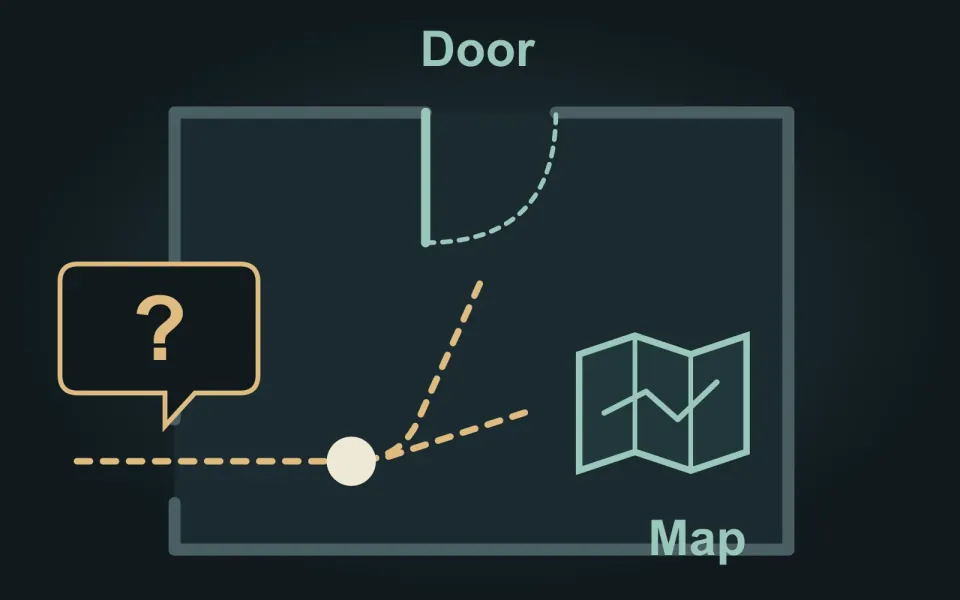
After a game playtest, ask about a specific moment before explaining what was supposed to happen. A useful follow-up gives the player room to describe their goal or expectation. It should not ask them to confirm the problem your team has already guessed.
Return to a moment, not a verdict
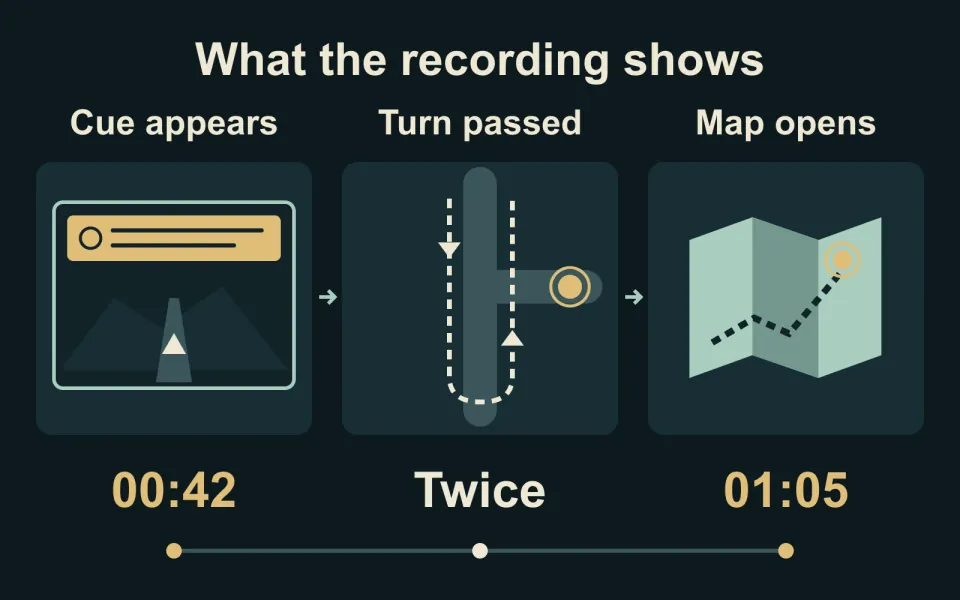
Choose a short sequence you did not understand and keep its timestamp. In a hypothetical session, a player approaches a door, turns away and opens the map. That sequence is observable; why they changed direction is still a question. Start with “What were you trying to do here?” rather than “Why did you miss the door?”
The GOV.UK guidance on moderated usability testing recommends open-ended questions about participants’ comments and time at the end for follow-ups on unclear observations. Applying that approach to a game, we would save nonessential clarification for a natural pause or the end of the session, so the question does not interrupt the discovery being observed.
Leave your explanation out of the question
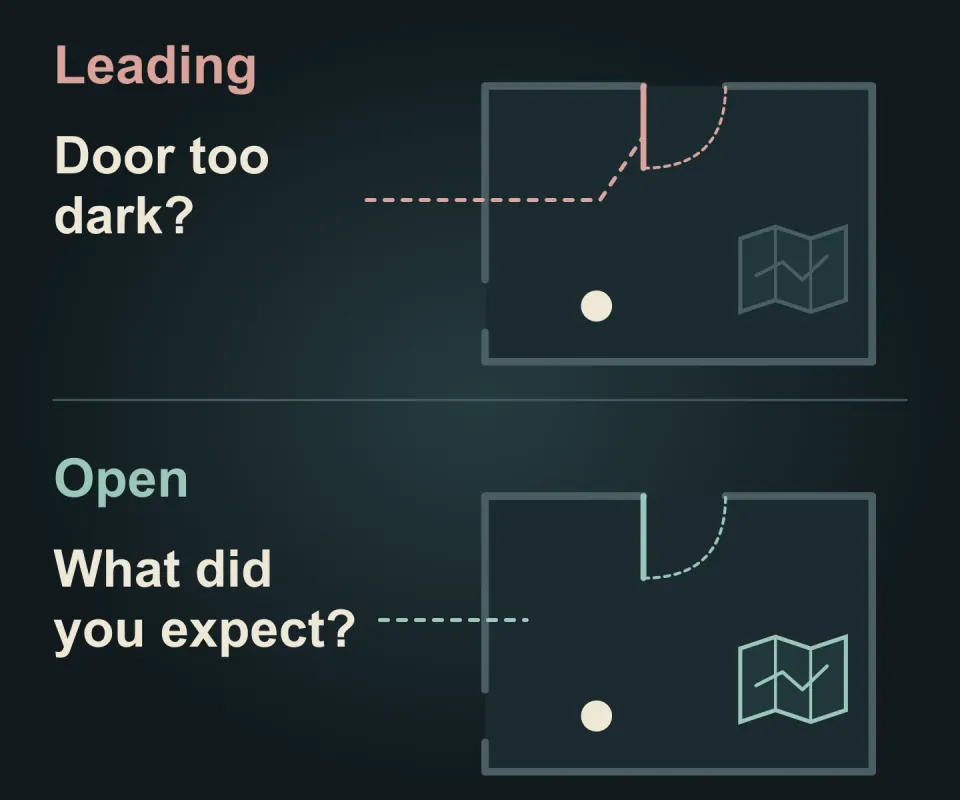
“Door too dark?” supplies both an object and a possible cause. “What did you expect?” leaves the player room to describe something else: perhaps they wanted to check the map before entering, or thought the door was decoration. Those are possible answers, not findings from a real session.
Ask one question, then give the person time to answer. If they use an unclear phrase such as “It felt wrong,” follow with a neutral request for detail: “What felt wrong?” Avoid turning the exchange into a list of your theories about lighting, controls and objectives.
Explain the intended behavior afterward if that discussion is useful. Record when the explanation happened. A later successful attempt after instruction is different evidence from the original unprompted attempt; keep both rather than replacing the earlier observation.
Keep the prompt with the answer
In your notes, retain the build, timestamp, exact question and the player’s response. Separate a direct quote from your summary. If a clip was replayed or a hint was given, record that context too. Otherwise, someone reading the report may mistake an answer prompted by the moderator for a spontaneous observation.
Use the response to guide the next check, not to prove a cause by itself. Compare it with the recording and other relevant sessions. “I thought it was locked” suggests checking how the door communicates its state; it does not establish that every player will interpret it that way.
Twined’s Playtest Analysis reviews recordings you supply and separates observations from possible explanations. Tell us what you want to understand, and include any follow-up notes with the relevant recording.