Playtest Recordings: Visible Does Not Mean Noticed
When reviewing a player-session recording, separate a cue appearing on screen from evidence that the player noticed or understood it. A report can describe the first directly. The second needs more support than a screenshot.
Describe the visible sequence
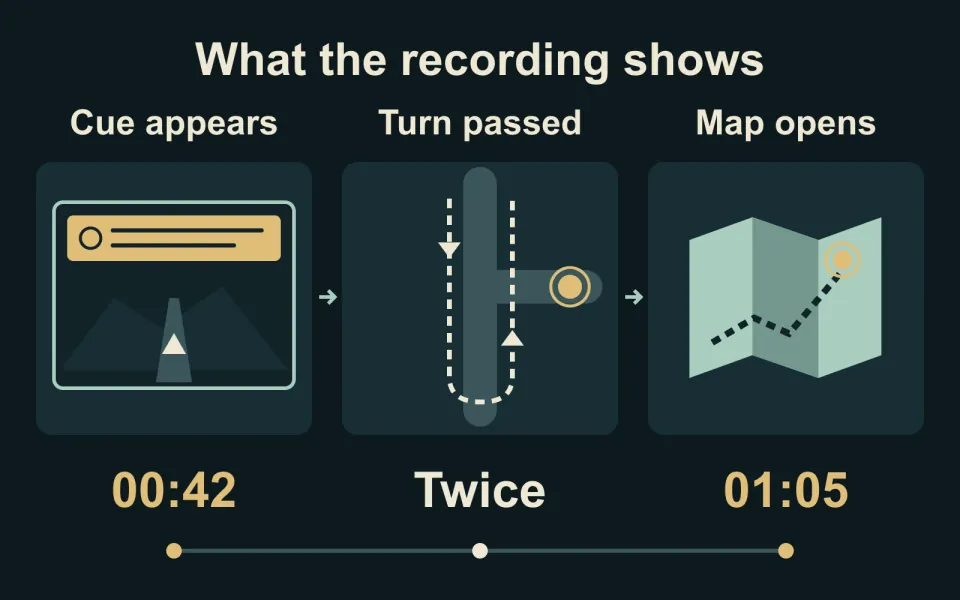
Consider a hypothetical navigation session. At 00:42, an objective panel appears. The player passes the marked turn twice, then opens the map at 01:05. Those are observable events. “The player ignored the objective” adds an explanation that the clip has not established.
The GOV.UK research-analysis guidance recommends recording what people did or said separately from what the observer thinks it means. Our recommendation for a game recording is to keep the cue, the player’s actions and any explanation in separate notes.
Attach the source filename, build and time range. Retain the preceding instruction and any help given during the session; our playtest-task article explains why those prompts matter.
Check what the capture includes
Replay the cue’s first appearance at normal speed, then pause to inspect it. Record whether it remains visible, disappears before the player reaches the turn, or sits behind another panel. If the capture crops out the HUD or loses frames, record that limitation before drawing a conclusion about the game.
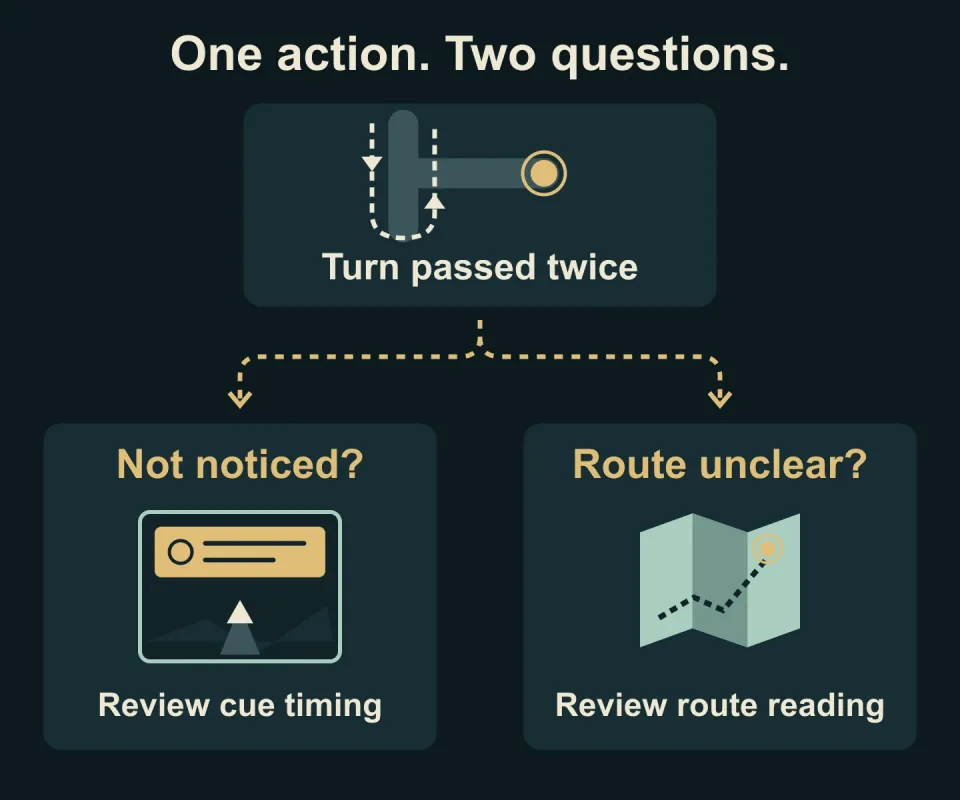
The game-screen capture alone does not show where the player’s eyes were directed. Passing the turn could reflect missed information, a misunderstood route or a deliberate choice to explore. If the player says something, preserve their words and timestamp. Keep their account alongside the visible action rather than treating either as a complete explanation.
Choose the next check
For the hypothetical session, the unresolved question is whether the player understood where the objective was. Review their earlier actions and comments for evidence. If that evidence is absent, a follow-up question such as “What were you trying to do here?” can help investigate the decision without supplying the intended answer.
Keep the proposed change open until the question is clearer. A larger marker, a different route and a timing adjustment address different possibilities. Record what would support each explanation before selecting one. A single session also cannot establish how often other players encounter the same problem.
Twined’s Playtest Analysis reviews recordings supplied by your studio, with timestamped observations and practical next checks. Discuss a recording review if you need help separating what the footage shows from what remains uncertain.