Game Music Feedback: More Intense Does Not Just Mean Louder
“Make it more intense” leaves a composer guessing. Do you want urgency, weight, unease or a bigger emotional payoff? Before asking for more volume, describe the change in the player’s situation and what the music should communicate.
Name the feeling and the moment
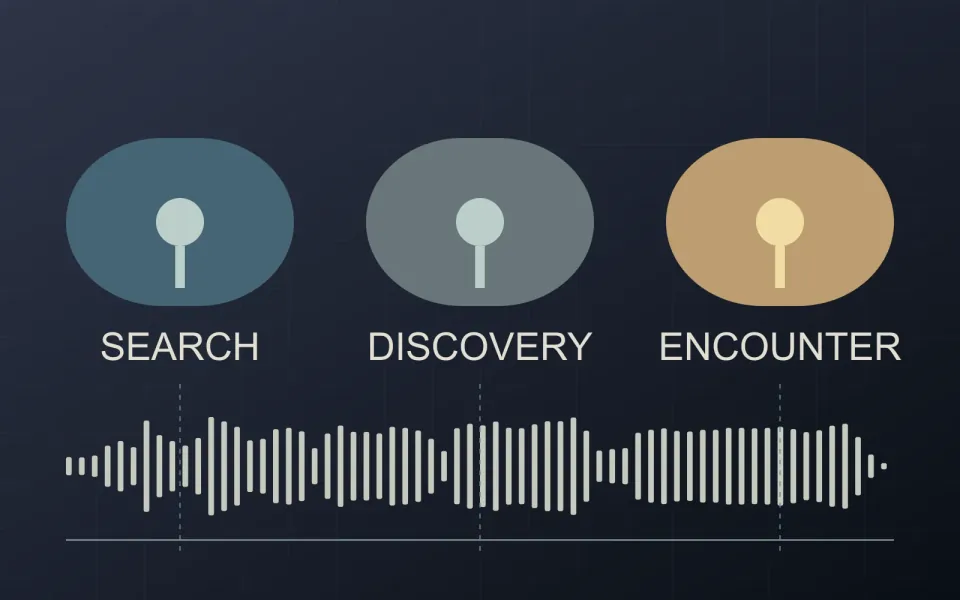
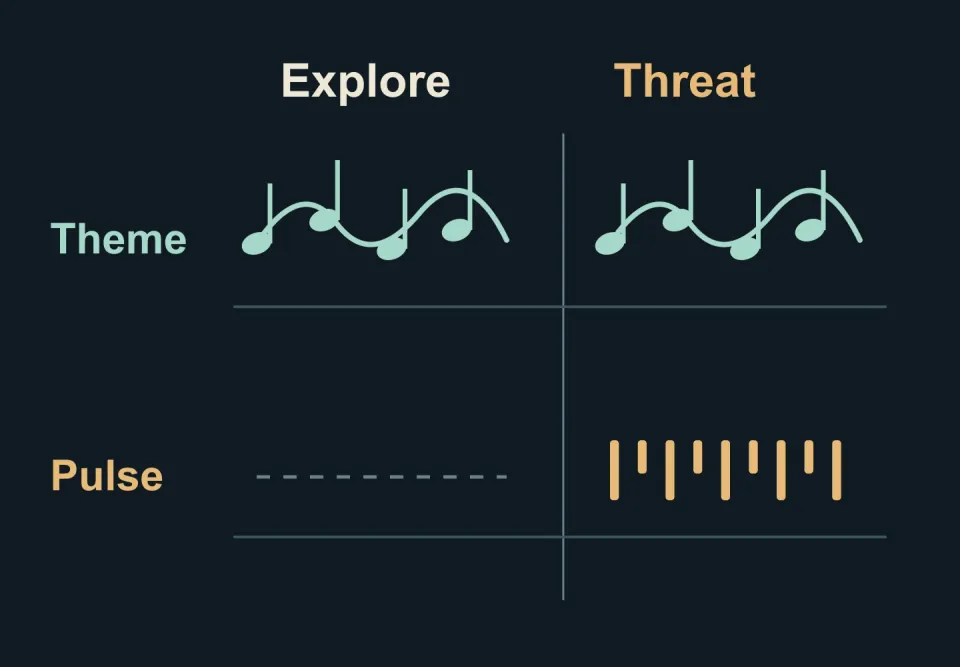
Twined’s recommendation is to give a contrast, not an adjective alone. In a hypothetical exploration game: “The player is searching an empty station. When footsteps approach, keep the familiar theme, but make the space feel less safe. Avoid making it sound like a battle has already started.” That gives the composer both a direction and a boundary.
Explain whether the music is supporting a scripted sequence or a player-controlled state. A threat that can last several minutes needs a different review from a ten-second reveal. Share the relevant gameplay reference, including what the player can still hear or do.
Separate the arrangement from the level
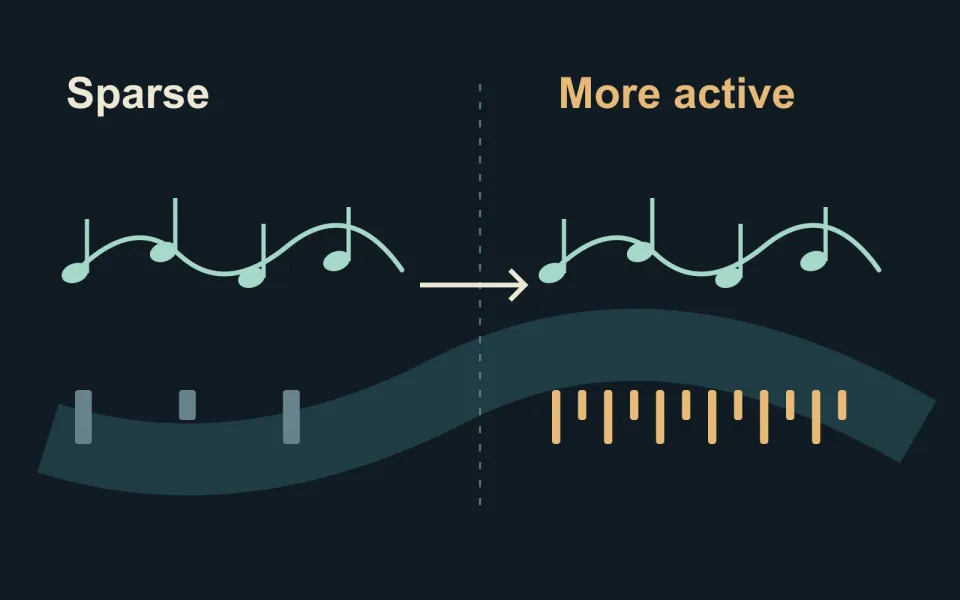
In his Berklee Online lesson on interactive scoring, Michael Sweet describes changing instrumentation or arrangement in response to game events. The musical idea can remain recognizable while the instruments carrying it change. That is one option to discuss, not a requirement to commission an adaptive system.
For the station example, ask for a short alternative that keeps the theme while introducing a more insistent pulse. Listen for whether that pulse suggests the intended uncertainty. More instruments are not automatically better: a thinner texture or a less settled harmony may suit the scene more closely.
Keep the listening setup consistent and ask for previews at comparable perceived levels. This is a listening check, not a loudness certification. Compare the emotional effect before choosing the balance against dialogue, effects and other in-game sound.
Approve the change in context
Play both versions against the same gameplay moment. Note what changed, what should remain and what still misses the scene. A useful response is: “The pulse helps the approach feel urgent; keep the melody restrained because the danger is still unseen.” That is more actionable than approving the louder file.
If the cue must change during gameplay, agree who owns the transition behavior and in-engine testing. A convincing preview does not prove that every transition or layer combination works. Our cue briefing guide helps define the starting moment.
For original game music, share the scene and the emotional change you need. We can define the cue and agreed versions around that moment.